Project Description
The DURABLE project focuses on advancing the circular economy of noble metals and rare-earth elements (REE) in the European Union by developing green and sustainable hydro-solvometallurgical processes. These processes aim to recover selected noble metals, namely gold (Au), platinum (Pt), and rhodium (Rh), from waste electric and electronic equipment (WEEE) and spent automotive catalysts (WCat).
The project addresses the complexity of extracting secondary raw metals from waste, which involves hazardous chemicals and high temperatures, posing safety risks and environmental impacts. By employing selective hydro-solvometallurgical methods, DURABLE aims to significantly reduce these hazards compared to conventional leaching techniques.
The recovery process involves refining leaching liquors through adsorption on both conventional and innovative sorbents, enhancing yield and selectivity. These metal-loaded sorbents offer two recovery strategies: thermal recovery of noble metals for industrial use and utilization in catalysis or fuel cell electrodes.
Furthermore, DURABLE explores the potential of using recovered Pt and Au catalysts to enhance biorefining productivity, particularly in glycerol valorization, offering new pathways for sustainable resource utilization. Through these efforts, the project aims to boost the sustainability and circular economy of noble metal recovery processes, contributing to EU's strategic objectives.
The multidisciplinary research team of DURABLE has been assembled to ensure the expertise necessary to accomplish project tasks. The DURABLE consortium involves personnel from the Department of Chemical, Material and Industrial Production Engineering (DICMAPI) at the University of Naples (UNINA) and the Institute of Sciences and Technologies for Sustainable Energy and Mobility (STEMS) at CNR.
Research units
The UNINA unit comprises 5 faculty members potentially supported by master's and doctoral students. Their primary goal is to train new, highly qualified professionals aiming for future academic or professional careers in the field of regenerative chemistry of precious metals. This strategic focus is one that UNINA intends to vigorously pursue in the coming years. The faculty members belong to scientific disciplinary areas such as Chemical Plants (ING/IND-25), Industrial Chemistry (ING/IND-27), Chemical Technologies (CHIM-07), and Metallurgy (ING/IND-21). The staff includes outstanding figures in their respective research fields, serving as leaders in unit operations, chemical process safety, material chemistry, catalysis, electrochemistry, and combustion processes. They bring a wealth of technical, scientific, and managerial experience, ensuring the successful execution of activities within the planned timeframe. Additional key professional figures may be hired as the work progresses to meet specific operational needs within the UNINA staff.
The STEMS Research Team is composed by 3 personnel units with a long experience in the research fields related to this project. Their expertise mainly relies in the fields of catalysis, thermal treatments, multiphase flows and reactors, metals leaching and belongs to the scientific disciplinary areas of Chemical Plants (ING/IND-25) and Industrial Chemistry (ING/IND-27).
The UNINA Research Team is composed by:
Prof. Francesco Di Natale – Associate professor of Impianti e Processi Chimici (Impianti Chimici, SC 09/D3 SSD ING/IND-25).
Expertise valuable to the project: Adsorption; Leaching of Pt, Pd, Au, Rh from spent catalyst and WEEE; Unit operation and plant design; Multiphase flow; Exhaust gas cleaning; Water treatment.
Role in the project: Principal Investigator - Responsible for Activity 1; Researcher involved in Activities 2, 4 and 5. Responsible for project management (Activity 6).
Prof. Roberto Andreozzi - Full Professor of Industrial Chemistry (Chimica Industriale, SC 09/D3 SSDING-IND/27)
Expertise valuable to the project: Studies on the application of AOP for pollutants removal from water and wastewater; Application of photocatalytic processes to solar hydrogen production and metal removal from aqueous solutions; Chemical Process Safety.
Role in the project: Associated Investigator - Researcher involved in the Activities 1, 2, 3 and 5.
Prof. Giuseppina Luciani - Associate Professor of Principles of Chemistry for Applied Technologies (PCAT) (Fondamenti Chimici delle Tecnologie, SD 03/B2, SSD CHIM/07)
Expertise valuable to the project: Green chemistry approaches for valorization of bio-wastes and their conversion into added value functional materials; Design of catalysts for H2 production through thermocatalytic and photocatalytic processes; Thermoanalytic methodologies for materials characterization (reactions, phase transitions).
Role in the project: Associate Investigator; Responsible for Activity 2; Researcher involved in Activities 3 and 5.
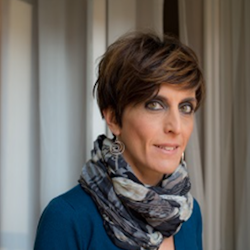
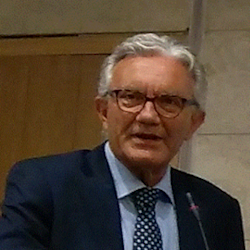
Prof. Tullio Monetta - Associate professor of Metallurgy( Metallurgia, SD 09/A3 SSD ING/IND-21)
Expertise valuable to the project: Electrochemical processes, use of Deep Eutectic Solvents to dissolve selectively precious metals and their recovery.
Role in the project: Associated Investigator - Researcher involved in the Activities 1and 5.
Dr Roberto Chirone - Researcher of Impianti e Processi Chimici (Impianti Chimici, SC 09/D3 SSD ING/IND-25).
Expertise valuable to the project: Methodologies for assessing sustainability and circularity of conventional and emerging technologies/ products. He is expert in applying Life Cycle methodologies (LCA, LCC and social LCA).
Role in the project: Associate Investigator - Responsible for Activity 5; Researcher involved in Activity 4.
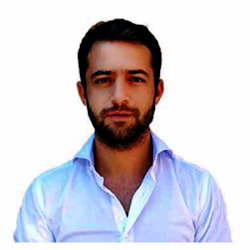
The STEMS-CNR Research Team is composed by:
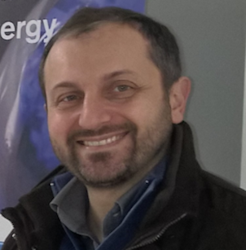
Dr. Gianluca Landi - Resarcher
Expertise valuable to the project: Catalysts design and preparation; catalysts characterization; catalytic (multiphase) reactors; multiphase flow; pollutants abatement.
Role in the project: Substituted Principal Investigator, Head of the STEMS unit - Responsible for Activity 3; Researcher involved in Activities 2, 5 and 6.
Dr Ilaria Di Somma - Researcher
Expertise valuable to the project: Experimental analysis and kinetic modelling of: AOP for the removal of organic pollutants from water and wastewater, photocatalytic processes for recovery of metals from wastes and scraps, leaching process of platinum group metals in mild conditions.
Role in the project: Associated Investigator – Researcher involved in Activities 1, 3 and 4.
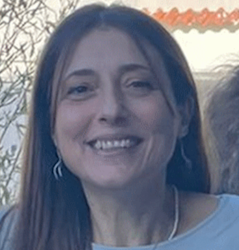
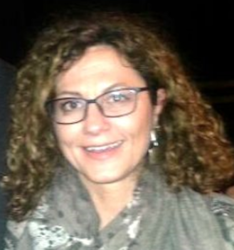
Dr. Giovanna Ruoppolo - Senior Researcher
Expertise valuable to the project: Thermal conversion process (torrefaction, pyrolysis, gasification, combustion) for biomass and waste valorization, fixed and fluidized bed reactor development, catalyst development and characterization.
Role in the project: Associate investigator - Responsible for Activity 4; Researcher involved in the activities 3 and 5.
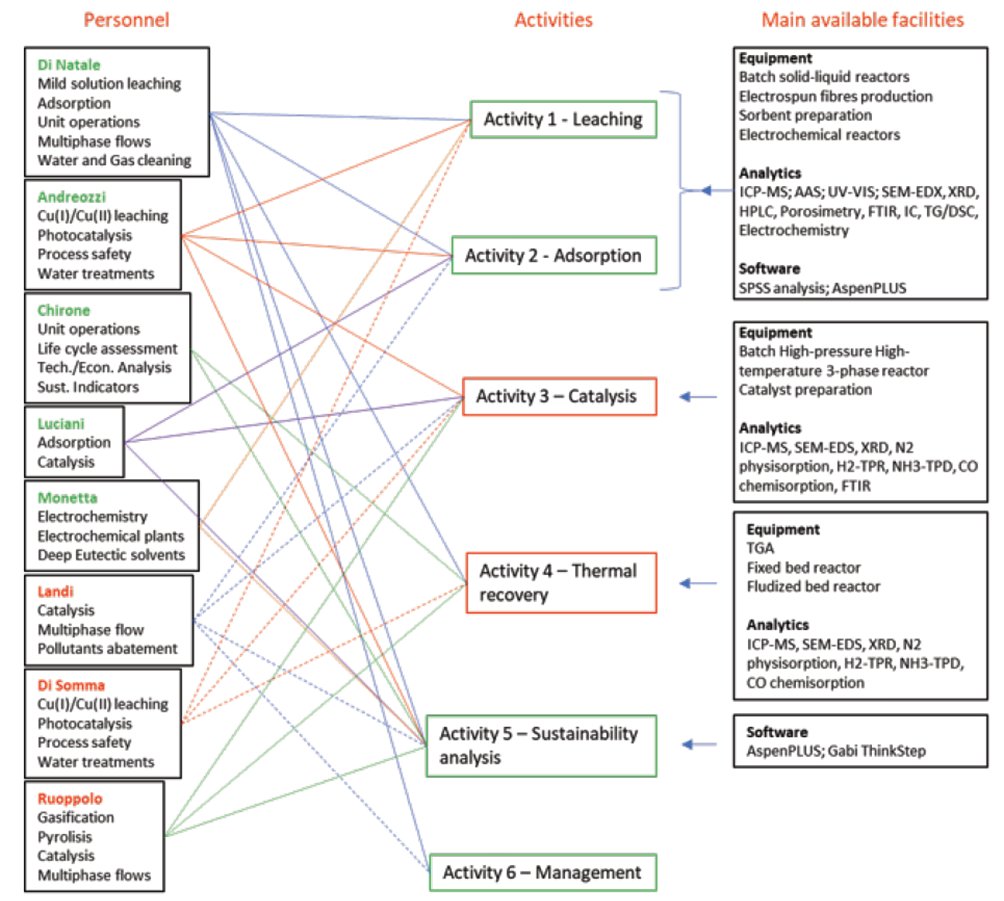
Here is the summary of the contribution of each researcher of the UNINA and CNR-STEMS staff on the project activities, as well as the facilities available to perform each of the activities, in terms of equipment, main analytics and software.